The team structure for consistent and optimal impact.
Hey there, it’s been a minute.
Professionally, I’ve been very heads down the last few months working on Pearl Planner. Personally, I’ve been working on selling our acreage in Minnesota and moving my family somewhere where the sun shines more often, the bugs don’t try to rapidly devour your flesh (and soul) and where we can have more options to be active outside year round — currently scoping Northern California.
I try to share a mix of content that ranges from product thinking, to career development, to hands on tinkering and I realized it’s been a while since I got into more practical hands-on product leadership. Last Summer I had a chance to work with Oji and Udezue to help them get their new book launched. It’s called “Building Rocketships” and it’s potentially the most useful and applicable book for operators that I’ve been able to find. While it has some content on product thinking, strategy, etc. It’s much more grounded in proven systems, strategies, and processes that power high performing product teams.
For this post, I chose one of my favorite foundational concepts from the book, that essentially answers the question, “How do I build a team that consistently ships high quality and high impact work?”
The Shipyard: A Proven Evolution Beyond EPD
The traditional EPD (Engineering, Product, Design) model served as the foundation of technical software product management for nearly four decades. But as Oji and Ezinne detail in “Building Rocketships,” this model had a fatal flaw: no one fully owned the final solution.
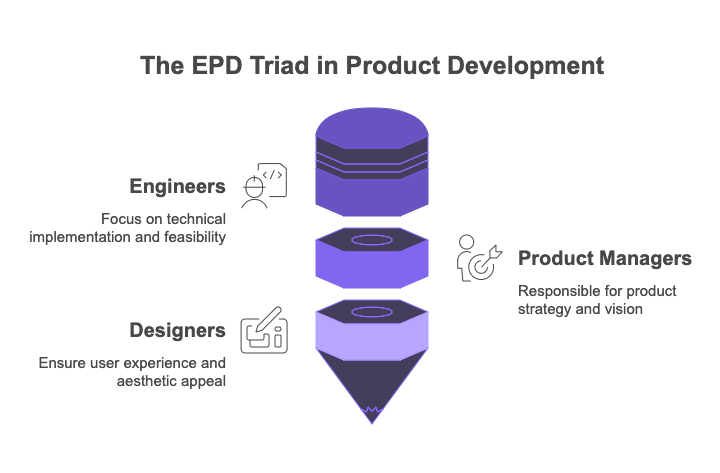
EPD teams weren’t truly independent. Engineers had to prioritize departmental security reviews over squad missions. Product managers wrote specifications, handed them off, and moved to the next problem. The result? Products and features that consistently missed the mark because the team was unfocused.
Spotify’s 2012 innovation of autonomous EPD squads (7 engineers, 1 PM, 1 designer) showed the power of mission-focused teams. But even this improvement had a critical gap: once the squad shipped a feature, they’d “toss it over the wall” to product marketing, who lacked the context to nail the messaging.
The Shipyard Solution in Practice
The Shipyard model expands the EPD triad into a sextet that includes:
- 7 Engineers (core development capacity)
- 1 Product Manager (strategy and coordination)
- 1 Designer (user experience and interface)
- ⅓ Customer Research (user insights and validation)
- ⅓ Data Analysis (metrics and behavioral insights)
- ⅓ Product Marketing (positioning and storytelling)